
Innovation in agriculture is often associated with new technologies, new ingredients, or new modes of action.
However, the difference between a promising formulation and a successful product often lies not only in the novelty of its components, but also in the quality, consistency, and reliability of the raw materials used to build it.
For formulation and R&D teams, the challenge is rarely finding ingredients. The market offers a wide range of amino acids, plant extracts, protein hydrolysates, and functional compounds.
The real question is:
Which raw materials can deliver consistent, reproducible, and scalable performance over time?
Few illustrate this better than glutamate.
When the Origin of a Raw Material Makes the Difference
Two ingredients may share the same chemical identity while offering very different levels of quality, consistency, traceability, and technical support.
For this reason, the origin of a raw material can be just as important as its composition.
The way an ingredient is produced, the controls applied during manufacturing, the stability of its specifications, and the ability to ensure a reliable supply all directly influence the development of new products.
In a context where reproducibility and quality are becoming increasingly important, companies are looking for suppliers that provide more than a raw material.
They are looking for knowledge, expertise, and confidence.
More Than a Century of Glutamate Expertise
The history of glutamate is closely linked to Ajinomoto.
Since the beginning of the twentieth century, Ajinomoto has been a pioneer in the industrial development and production of glutamate, accumulating more than 100 years of expertise in fermentation, industrial processes, quality control, and application development.
Over this time, the company has built extensive knowledge in the production, purification, and utilization of glutamate across different industries.
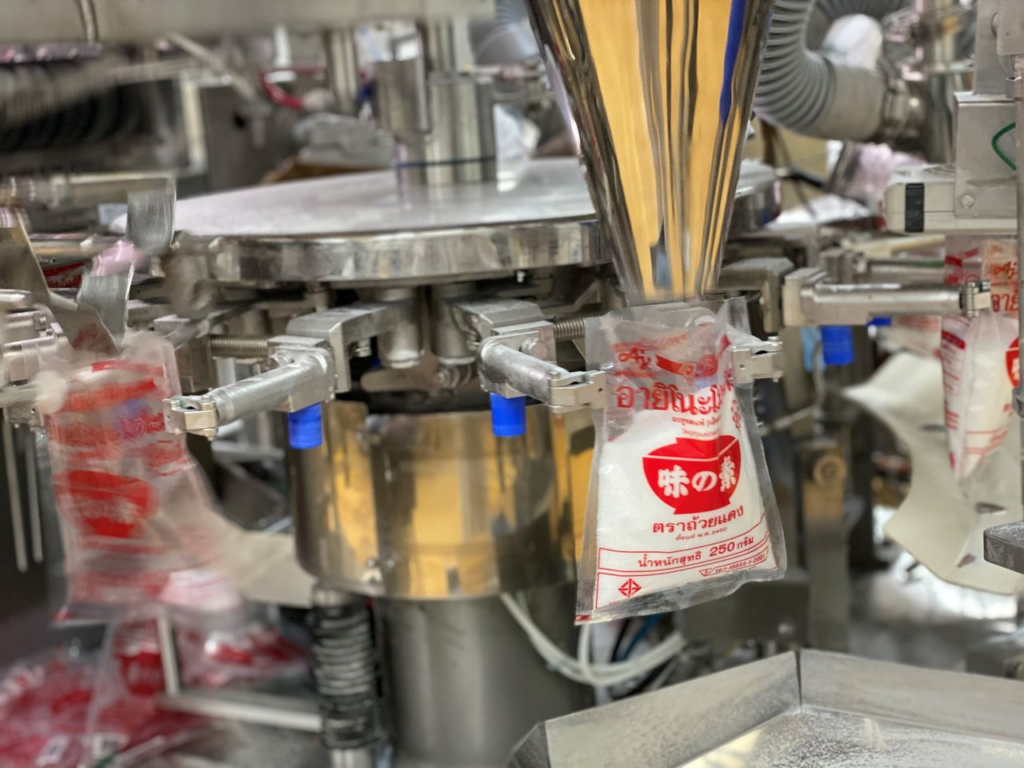
Today, that accumulated expertise represents a significant advantage for companies seeking raw materials supported by strong technical know-how and consistent manufacturing practices.
Because when a raw material becomes part of an agricultural formulation, what matters is not only what it contains, but also the ability to ensure that it performs consistently batch after batch.
Why Manufacturing Standards Matter
In agricultural formulation, the quality of a raw material is not defined solely by its chemical composition.
Factors such as traceability, manufacturing consistency, process control, and technical documentation are equally important.
For companies developing products for multiple markets, these elements can directly influence formulation reliability, regulatory readiness, and supply security.
This is why working with raw materials produced under rigorous manufacturing standards represents a competitive advantage.
The combination of Ajinomoto’s global expertise in fermentation and amino acid production, together with manufacturing processes supported by demanding quality standards, provides ingredients backed by consistent specifications, technical documentation, and specialized support.
Why Glutamate Continues to Attract Interest
Glutamate occupies a central position in plant metabolism.
It is one of the most important amino acids involved in nitrogen assimilation and the synthesis of other amino acids, participating in multiple metabolic pathways that are essential for plant function.
Its role in nitrogen metabolism also explains the continued interest in areas related to nutrient use efficiency, one of the major challenges facing modern agriculture.
For these reasons, glutamate remains a raw material of interest in the development of agricultural formulations.
In addition to its physiological relevance, it offers characteristics that are particularly attractive from a formulation perspective:
- high water solubility;
- ease of incorporation into liquid formulations;
- compatibility with different formulation concepts;
- suitability for both liquid and solid systems;
- ease of handling during industrial manufacturing processes.
These characteristics make glutamate a versatile tool for companies developing amino acid-based solutions, specialty nutrition products, and customized formulations.
From Ingredient to Formulation
Effective agricultural solutions are not built around a single ingredient.
They are built through the right combination of raw materials, formulation expertise, and technical validation.
This means that the value of a raw material depends not only on its individual properties, but also on how effectively it can be integrated into a stable, compatible formulation capable of delivering consistent results.
At AgroSolutions, this principle is part of the way we work.
The combination of fermentation-derived raw materials, formulation expertise, advanced analytical technologies, and agronomic validation enables us to transform functional ingredients into solutions adapted to real market needs.
Consistency Is Also Innovation
When people think about innovation, they often think about new molecules or new technologies.
However, innovation also depends on consistency.
A raw material that maintains its specifications, integrates reliably into formulations, and is supported by industrial expertise provides significant value to development teams.
This is particularly important for companies working across different crops, regions, and agronomic conditions.
From this perspective, glutamate represents much more than an amino acid.
It represents a platform supported by decades of scientific knowledge, industrial expertise, and excellence in fermentation.
Looking Beyond the Molecule
For product developers, the most important question is rarely:
What is this ingredient?
The more relevant question is:
Can this ingredient help me develop a better product?
Answering that question requires much more than understanding a chemical composition.
It requires understanding the knowledge, expertise, and technical capabilities behind the raw material itself.
And that is precisely why glutamate remains relevant today.
Not because it is new.
But because more than a century of expertise continues to demonstrate the value of consistency, quality, and applied knowledge.
Conclusion
The success of an agricultural formulation does not depend solely on selecting functional ingredients.
It depends on working with raw materials supported by scientific knowledge, industrial expertise, rigorous manufacturing standards, and a proven ability to deliver consistent performance.
Few raw materials represent this reality better than glutamate.
Backed by more than a century of fermentation expertise, it continues to be a valuable tool for companies developing the next generation of agricultural solutions.
Interested in Exploring New Formulation Opportunities?
Whether you are developing a new amino acid-based formulation, evaluating functional raw materials, or looking for technical support for your next project, our team can help.
Contact AgroSolutions or fill out our form to discover how our expertise in formulation and fermentation can support your next agricultural innovation.