
Water stress can also be addressed from its physical origin: not only as a problem of water availability, but as a direct consequence of how water interacts with soil.
Limited infiltration, uneven distribution, soil hydrophobicity, and loss of hydraulic connectivity are among the main bottlenecks that restrict root water uptake, even when irrigation supply appears sufficient.
AjiWet® was developed precisely to address these physical limitations. It acts directly on the soil–water dynamics through a formulation approach designed to restore the functional balance of the system.
What AjiWet® Is and What It Acts On
AjiWet® is a soluble and biodegradable water-behavior enhancer based on the combination of a non-ionic surfactant and functional polymers, designed to optimize:
- Water infiltration into soil, even in low-affinity conditions
- Uniform redistribution throughout the soil profile
- Water retention within the root zone
- Overall Water Use Efficiency (WUE)
Its action is not limited to a single process. Instead, it simultaneously improves infiltration, distribution, retention, and hydraulic connectivity—key processes behind water stress even when irrigation inputs are adequate.
Mode of Action: Acting on the Physics of Water in Soil
Surface Tension Reduction
For water to be effectively used by plants, it must first enter the soil efficiently.
AjiWet® reduces the surface tension of water, preventing the formation of isolated droplets and promoting its spread across soil particles.
This effect enables:
- Greater water–soil contact
- Activation of capillarity even in moderately hydrophobic soils
- Faster and more uniform infiltration
- Efficient rehydration of dry or crusted surface layers
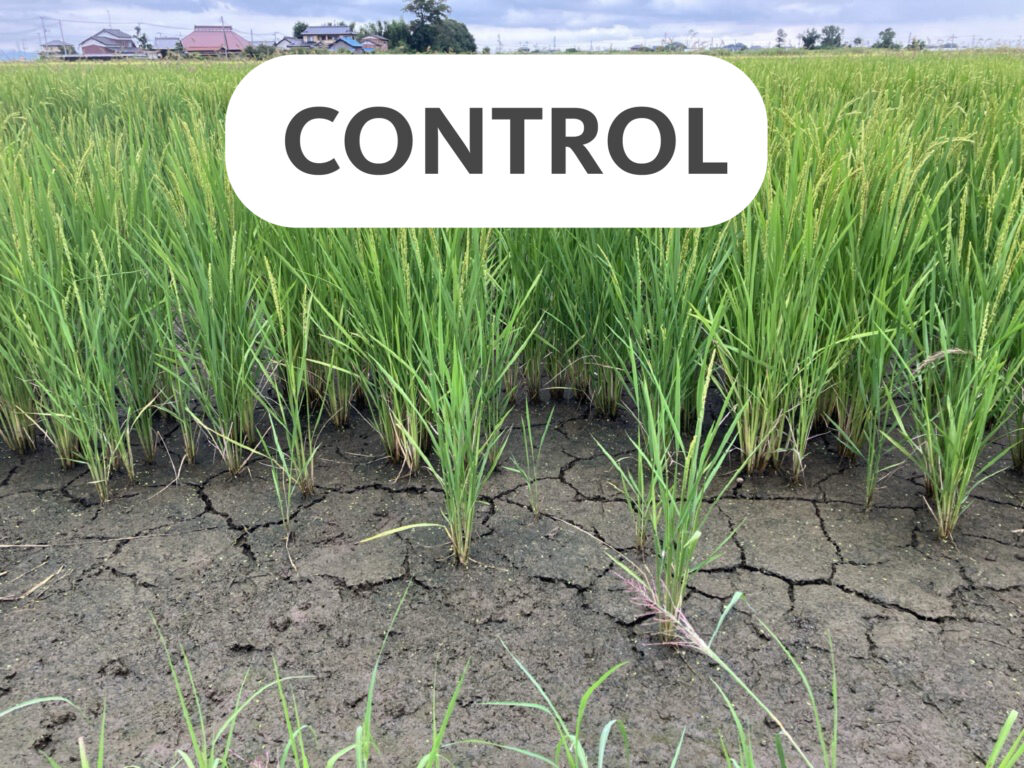
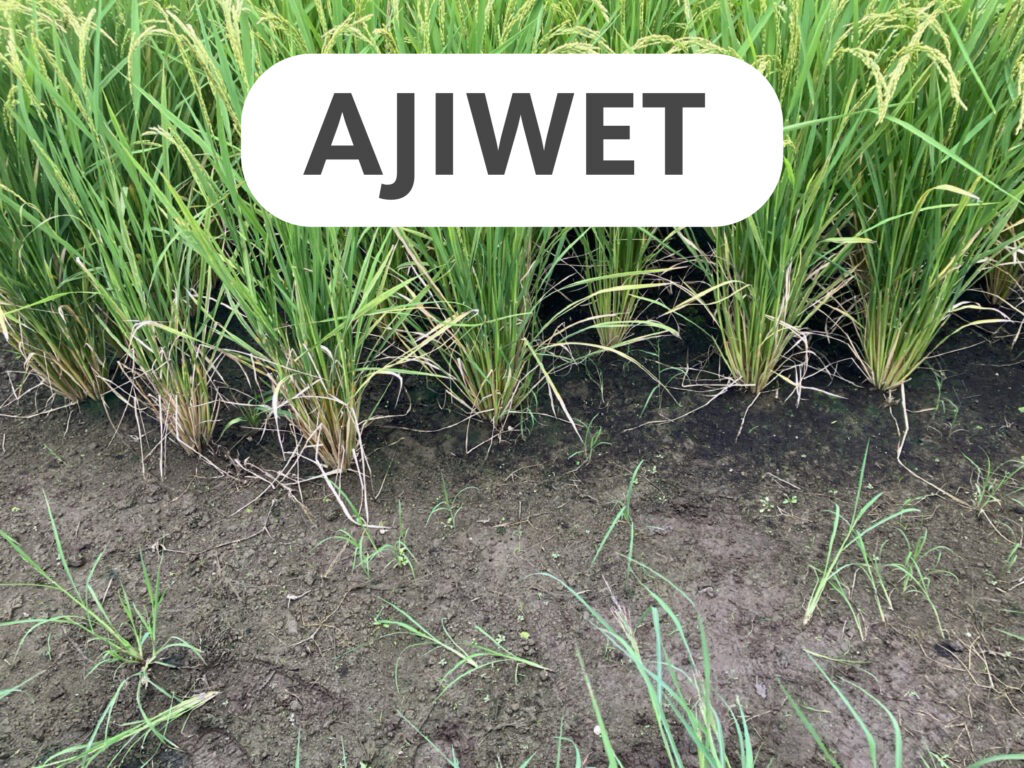
As a result, losses through runoff and surface evaporation are reduced, directing water toward the agronomically most relevant area: the root zone.
Field trials conducted during the flooding of rice paddies have shown that after AjiWet® application, water penetrates the soil in approximately half the time compared with untreated controls. While untreated plots rapidly lose moisture and show early signs of drying, treated plots maintain higher moisture levels both at the surface and below it after irrigation.
Deactivation of Soil Hydrophobicity
In many soils—especially after prolonged drought periods or in systems with high organic matter—zones with low water affinity develop. These areas hinder water infiltration and create irregular wetting patterns within the soil profile.
AjiWet® facilitates the interaction between water and soil surfaces, helping reactivate areas with limited wetting capacity and improving the continuity of the wetting front.
As a result, water redistributes more uniformly and a more functional moisture profile is restored within the root zone.
Restoration of Hydraulic Connectivity
Once water enters the soil, its movement depends on the hydraulic continuity between pores.
In dry, compacted, or structurally degraded soils, this connectivity is often fragmented, preventing water from efficiently reaching the root influence zone.
AjiWet® contributes to:
- Reducing resistance to water flow through the soil matrix
- Facilitating both lateral and vertical water movement
- Connecting previously isolated water pockets
- Restoring capillary continuity
This effect allows a more efficient redistribution of water toward the roots, even under unsaturated soil moisture conditions.
Optimizing Soil Water Flow and Improving Water Efficiency
The restoration of hydraulic connectivity promoted by AjiWet® enables water movement along the soil profile following natural moisture gradients.
Water moves naturally from wetter zones toward drier ones, supporting the dynamic process of root water uptake.
As root activity reduces the water content in its immediate surroundings, the improvement of hydraulic continuity allows the water present in the soil to be redistributed to this desiccated area, gradually restoring the water supply.
This behavior results in the formation of more continuous, wider, and more stable wetting bulbs—both vertically and laterally—leading to:
- A larger volume of effectively hydrated soil
- Reduced surface evaporation
- Lower losses from runoff or deep percolation
- Greater water availability between irrigation events
Consequently, AjiWet® improves Water Use Efficiency by enabling the same amount of water to maintain crops in better hydration conditions.
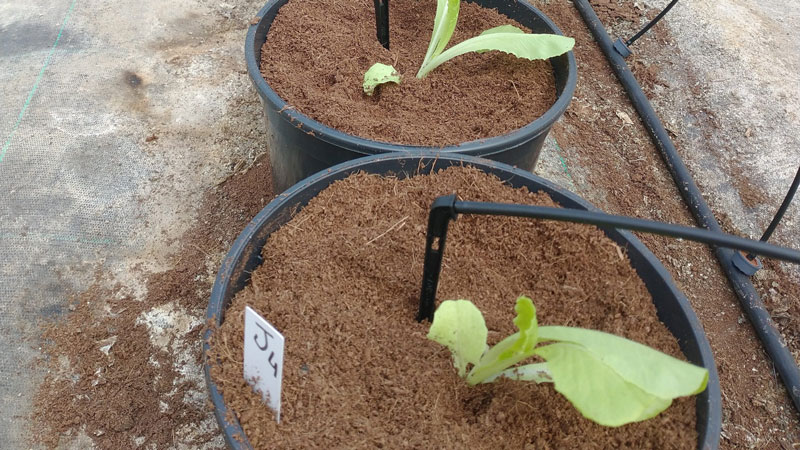
Trials conducted under water-stress conditions with a 40% reduction in irrigation have shown 10% increases in vegetative development compared with untreated controls subjected to the same stress level.
Improved soil water behavior translates into crops that are either more productive with the same water input or able to maintain productivity under water-limited conditions.
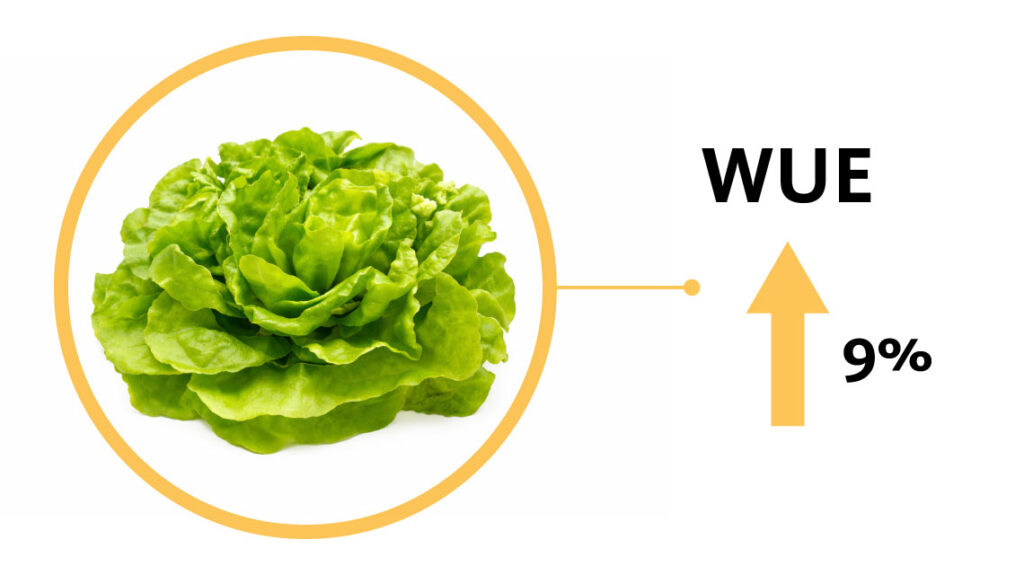
This effect is reflected in improvements in Water Use Efficiency (WUE), with up to 9% increases observed in AjiWet® trials.
Agronomic Implications
The impact of AjiWet® on soil water dynamics results in clear agronomic benefits:
- Better utilization of applied irrigation water
- Reduced water stress even under limited irrigation regimes
- Greater water stability within the root zone
- Indirect support of soil microbial activity
- Improved irrigation system efficiency
Together, these effects contribute to more resilient crops and more efficient and sustainable water management.
The AgroSolutions Vision
At AgroSolutions, we understand that water stress cannot be solved solely by increasing irrigation.
The real opportunity lies in designing how water behaves within the soil.
AjiWet® embodies this approach: a formulation solution that acts on the physical foundation of the soil–water–plant system, restoring functionality where it matters most—at the root level.