
Soil is a dynamic and complex ecosystem whose biological activity is critical for agricultural productivity. In this context, prebiotics are emerging as innovative biotechnological inputs capable of modulating and stimulating the activity of the soil microbiome, enhancing nutrient availability and assimilation, as well as the metabolic efficiency of crops.
At Ajinomoto AgroSolutions, the integration of biotechnology and advanced formulation drives a new generation of solutions designed to strengthen the interaction between soil and plant.
The Soil Microbiome: The Invisible Engine of Fertility
Soil hosts thousands of microorganism species that interact within a complex and dynamic ecological network. This microbiome regulates key processes such as nutrient availability and cycling, soil physical structure, and the plants’ natural defense mechanisms against biotic and abiotic stress. However, intensive soil use and changes in agricultural practices have altered this microbial balance, reducing biological activity and the soil ecosystem’s natural regenerative capacity.
Biotechnology applied to the development of agricultural prebiotics provides a precise and sustainable response to this challenge. Instead of introducing external microorganisms, prebiotics stimulate native microbial populations, reactivating beneficial communities and restoring the soil’s biological functionality.
What Agricultural Prebiotics Are and How They Work
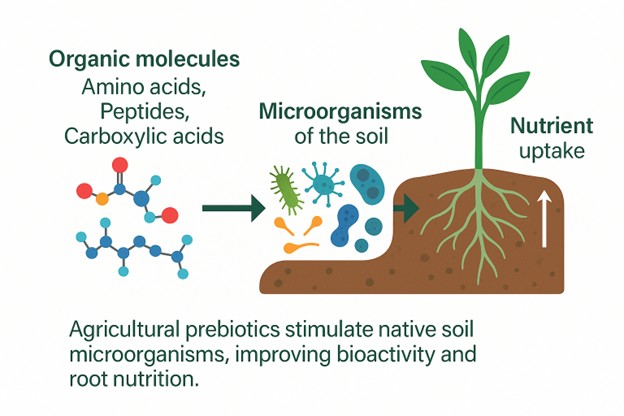
Agricultural prebiotics stimulate native soil microorganisms, improving bioactivity and root nutrition.
Agricultural prebiotics are organic compounds capable of nourishing and activating beneficial microbial populations naturally present in the soil. Unlike probiotics, they do not introduce new living organisms; instead, they create the right conditions for existing life to thrive.
Their mechanism of action is based on the selective supply of bioactive molecules —amino acids, peptides, sugars, and organic acids— that serve as an energy substrate for beneficial bacteria and fungi.
From Science to Formulation: The Ajinomoto AgroSolutions Vision
At Ajinomoto AgroSolutions, innovation in plant biotechnology is supported by more than 100 years of experience in fermentation and amino acids, resulting in scientifically grounded solutions with proven performance.
Through its AminoScience® technology, plant-based fermentative extracts incorporate more than 500 active metabolites, amino acids, carboxylic acids, vitamins, and phenolic compounds that exert a natural prebiotic effect. These compounds stimulate metabolic pathways related to nutrition, cell signaling, and stress tolerance, promoting a more active, balanced, and resilient soil ecosystem.
The integration of specific formulations with pure raw materials and controlled processes enables the design of precise, stable, and sustainable solutions capable of improving soil bioactivity without disrupting its natural balance.
Agronomic Impact: Living Soil, More Efficient Plants
Evaluating the prebiotic effect of a product requires a comprehensive study of its impact on the soil–plant–microorganism ecosystem, aiming to understand the interaction between soil microbiota and crop development. Ajinomoto AgroSolutions has studied the effect of its products on the soil microbiome.
After two applications, spaced one month apart, on a fava bean crop, results show an increase in the concentration of enzymes indicative of soil microbial activity.
| Enzyme | Increase vs. control | Function |
| β-Glucosidase | +131% | Greater decomposition of available organic matter |
| Dehydrogenase | +33% | Oxidation of organic matter; indicator of living soils |
| Phosphatase | +37% | Hydrolysis of organic phosphorus into inorganic forms; indicator of P availability |
The Biological Fertility Index was also calculated, a parameter that considers dehydrogenase and catalase activities as indicators of biological processes. It reflects the soil’s capacity to transform nutrients into forms assimilable by crops.
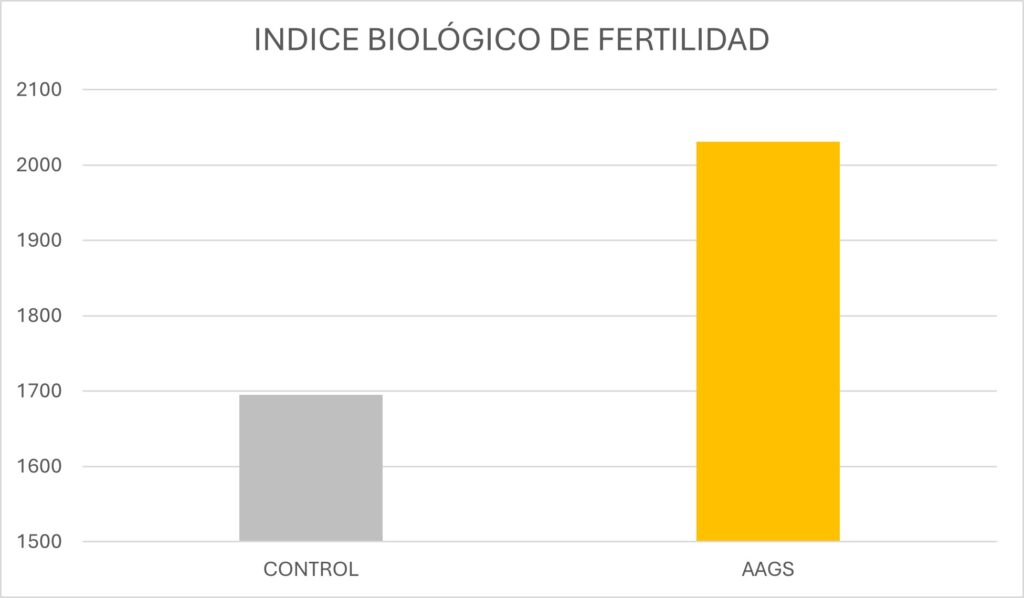
An Active Microbiome Multiplies Nutrient Use Efficiency and Stress Tolerance
Continued use of agricultural prebiotics can generate measurable effects on crop physiology and performance. Documented benefits include:
- Increased root biomass and improved soil aggregation, associated with increased microbial activity.
- Stimulation of key enzymes linked to nutrient mineralization and availability.
- Improved nitrogen and phosphorus use efficiency, resulting from higher activity of microorganisms involved in their biogeochemical cycles.
- Greater tolerance to water and heat stress, derived from improved functional strength of the soil–root system.
- Enhanced vigor, uniformity, and crop productivity under conditions where microbial response is significant.
These effects support the shift toward more efficient and sustainable agricultural systems based on biotechnological management of the soil microbiome.
Conclusion: The Future of Soil Is Designed With Biotechnology
The balance of the soil microbiome is the starting point for truly sustainable agriculture. Agricultural prebiotics represent the natural evolution of biostimulants, focusing not only on the plant but also on the ecosystem that sustains it.
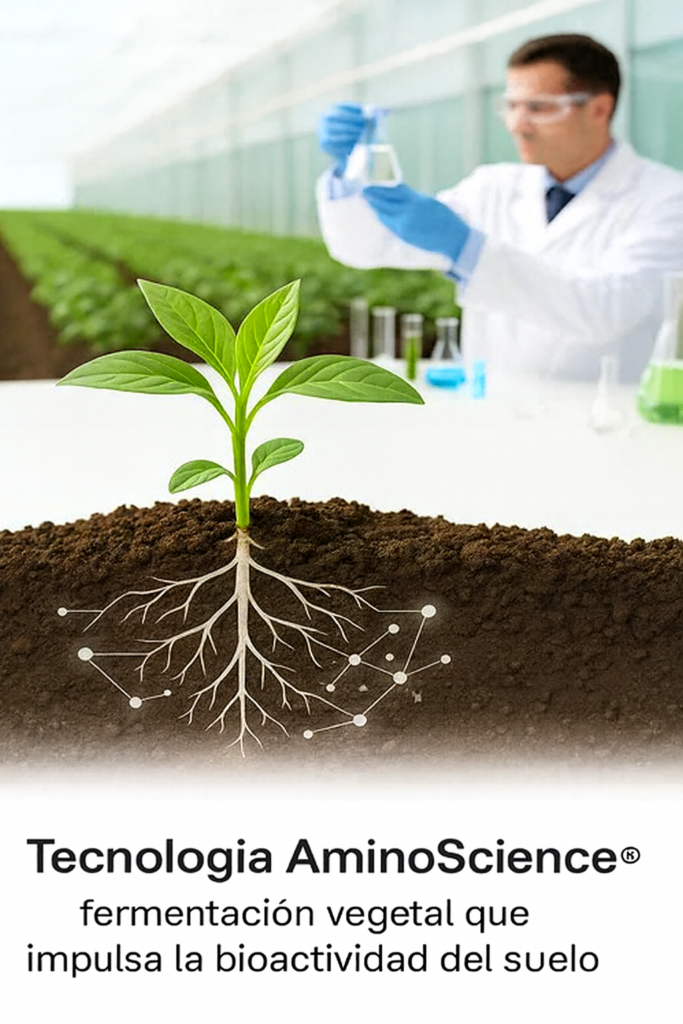
AminoScience® technology: plant fermentation that boosts soil bioactivity.
At Ajinomoto AgroSolutions, this vision is translated into solutions based on fermentation and formulation science, which activate soil biological processes and optimize plant–microorganism interaction, technology designed for those leading the transition toward smarter, more efficient, and regenerative agriculture.